Production Design Shapes More Than the Look and Physical Sets — Whether You Plan for It or Not
Estimated read time: 6–8 minutes
Production design in film and tv is where a story’s world, and its constraints, are meant to be worked out. But as virtual production and VFX have become more common, many design, scope, and cost decisions are pushed later in the process. Too often, that’s because art department workflows remain focused on look, physical sets, and costumes, without the tools or structure to meaningfully guide digital work.
Having been lucky enough to be in the room with filmmakers like Jon Favreau, Doug Chiang, Robert Stromberg, and others, I’ve seen how production design can, and should, help drive approach decisions not just for the physical, but for virtual production and VFX as well. This article reflects some of what I’ve learned from those rooms, and why expanding the role of production design matters now more than ever. - Felix
Roles, Responsibilities, and What “Production Design” Really Includes
What is this job, and where does it start and stop?
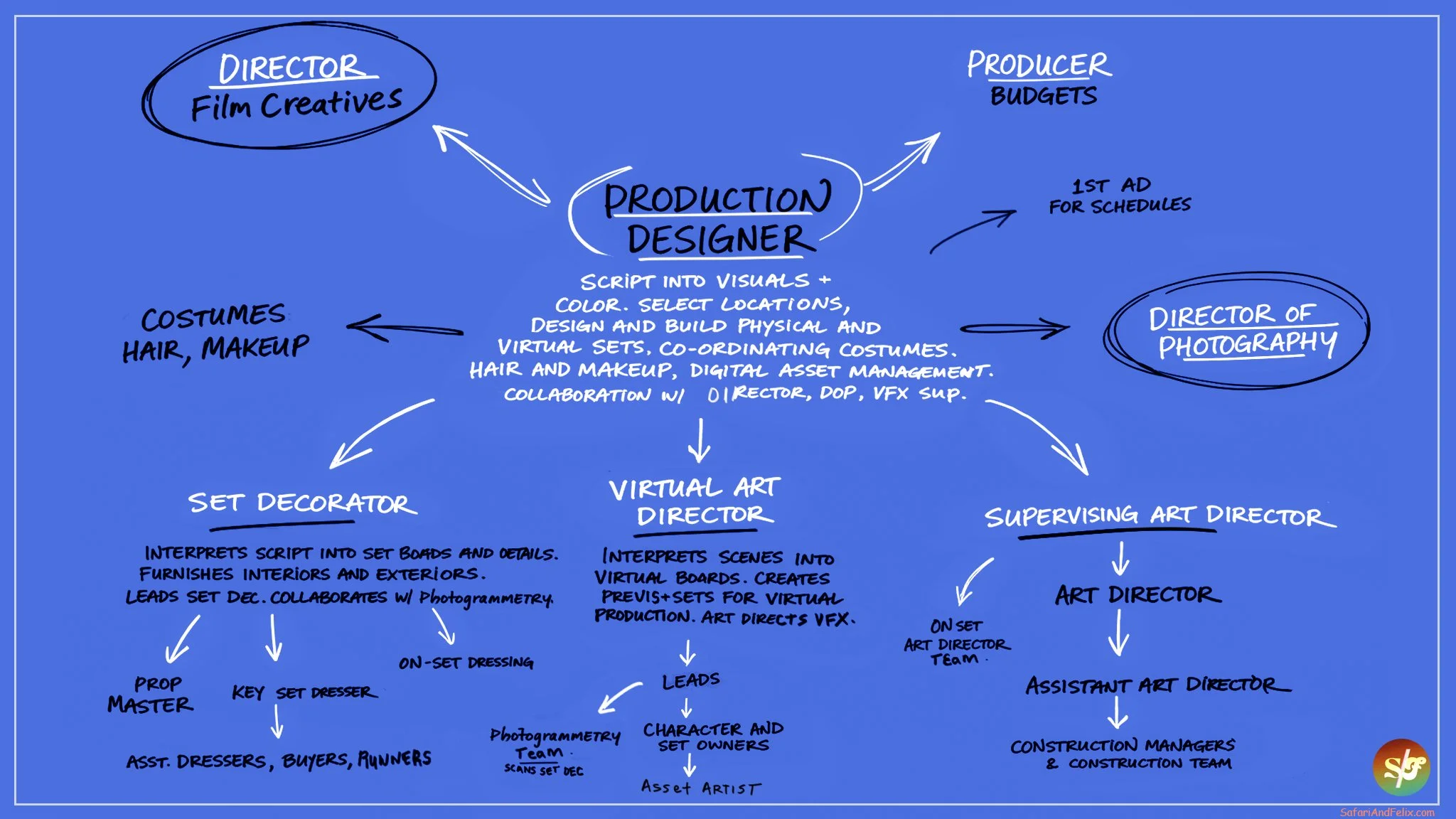
Production Designers are the head of the Art Department, and they often start earlier than people think; sometimes during writing, sometimes during development towards green-light. Even when a production designer is hired later, design decisions are already being made through references, conversations, and feasibility checks.
At its core, production design translates a director’s vision into visual metaphors that can be built, shot, and delivered within a set timeline and budget. Art directors manage execution - overseeing sets, locations, and construction. Set designers focus on technical drawings for physical builds. On certain shows, Virtual Art Directors and their real-time team, help build and manage digital characters and virtual environments.
Beyond sets, production design co-ordinates props, costume design and wardrobe, location scouts, virtual location scouts, and virtual pre-lights. Empowered to split scenes into physical builds, virtual production, VFX, and when applicable AI workflows.
Across pre-production through the end of production, the role evolves, from early concepts and world rules to supporting builds, the shoot, and pass-off to downstream teams; making production design a key driver of both story and practical decision-making.
Planning the World: Techniques That Prevent Expensive Surprises
How do you introduce virtual production and VFX techniques to the art departments, without slowing the project down?
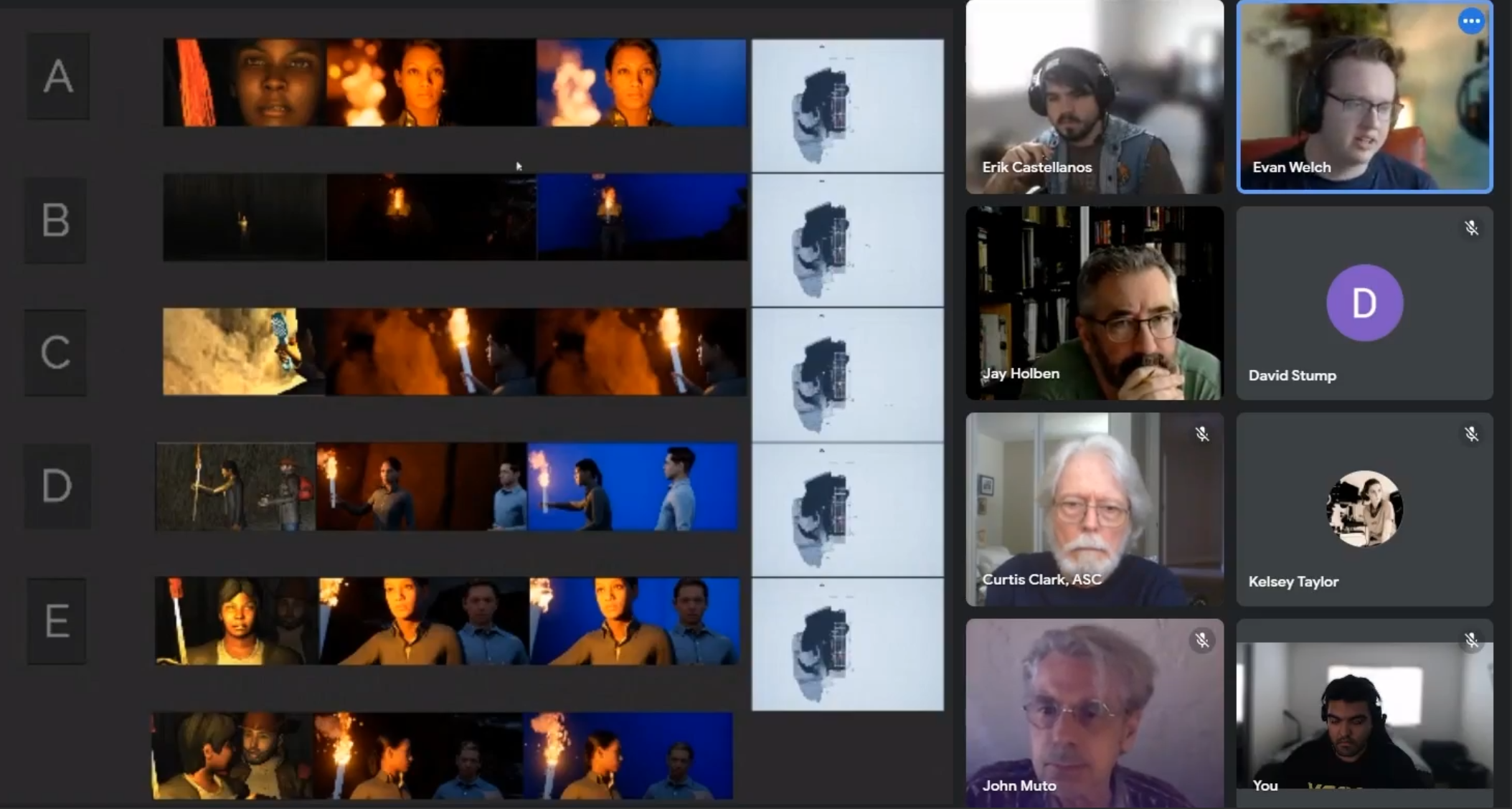
Virtual Art Department in virtual meeting with Directors of Photography to go over shots in virtual production shoot
These techniques aren’t about introducing more work, instead it’s about reducing any guesswork. Helping production design with early conversations with the director, producer, and, when possible, the cinematographer that help clarify coverage, scale, and lighting assumptions before scope locks in. Exploring locations virtually inside early designs speeds decisions up, allowing teams to test more ideas rather than slowing the process down.
Reference boards are a starting point, but quick 3D set blockouts, storyboards, lighting and camera tests help translate words into something visual and shootable. Seeing characters and cameras in the world early in production, makes it easier to refine ideas and reduce unnecessary work.
To design only what will be seen, you go through stages. ****Shot lists and scene breakdowns kick it off. Then we jump into visualizing coverage, whether in 2D, 3D, or simple foam-models, starts to reveal what needs to be built.
Designing productively includes understanding how the budget impacts materials, scale, reusability of a location or digital assets, locations available, and schedule. Keeping these constraints in mind leads to smarter design choices.
Catching late decisions early, means looking closely at time, people, and money. Scope creep, redesign loops, and “fix it in post” are common warning signs. Early alignment between design, camera, lighting, and story teams doesn’t remove all of the risk, but it keeps decisions intentional, and usually results in a stronger, more captivating world.
Physical vs Virtual vs VFX: How Decisions Travel Across Pipelines
When one decision hits three departments, how do you avoid mismatch?
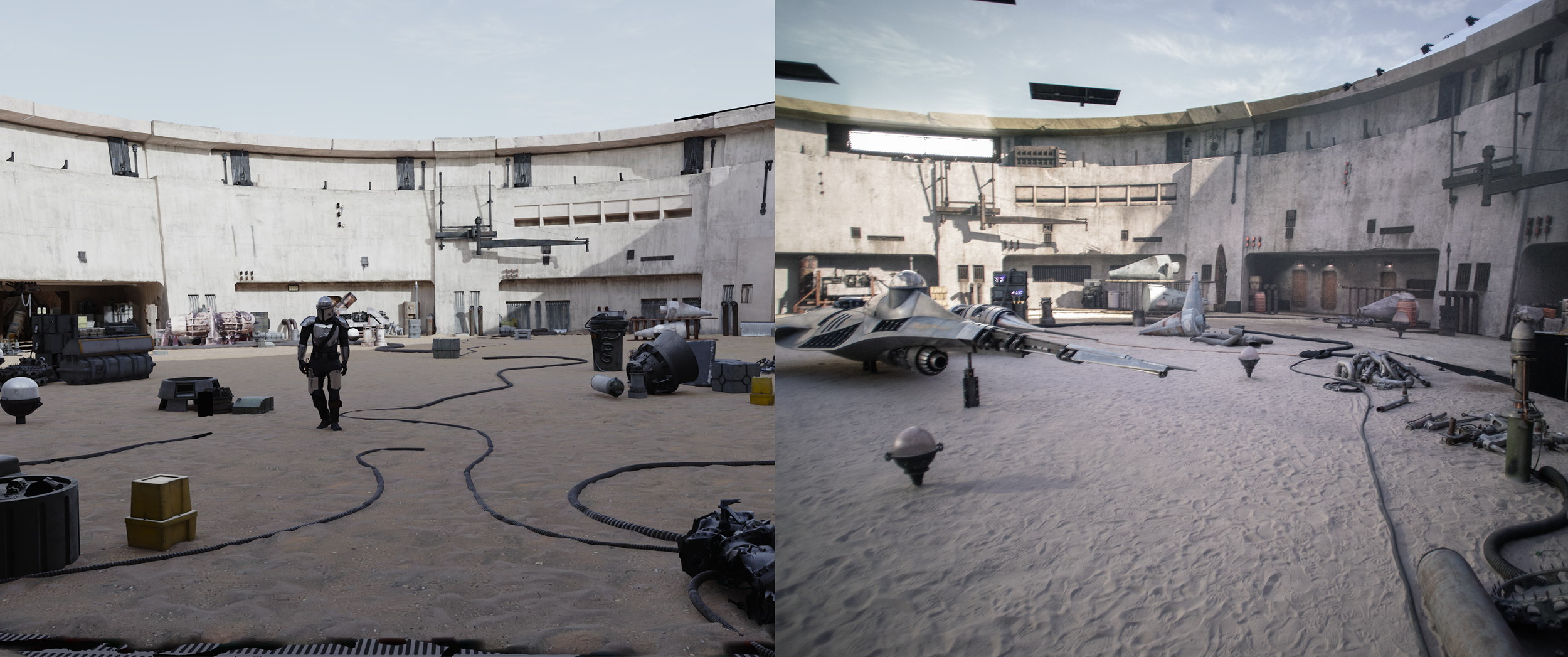
(Image Description: To the left - Unreal Engine Visualization Render, To the right - shoot day BTS shot)
When pre-production designs something and the final film looks very different, it’s often the result of unclear or incomplete turn-overs. One way to reduce that is to approach the work with the intention that what’s being created is usable, not just referential: physical teams need set designs with a clearer picture of camera-coverage; virtual production needs physical & virtual locations ready before the shoot; VFX needs clear visual targets, 3D layouts, virtual boards, previs, and material reference. A turnover document may include: concept art, reference imagery, style guide and color palette, environment blueprints, close-up imagery of materials, and Unreal Engine scenes, all signed off by the key creatives.
Virtual production (VP), in plain terms, uses game engines during filmmaking. VP is often used as simply a design tool on projects that are not using LED screens for the shoot, if your project is using LED screens, the virtual sets become the set-extension of a physical build and must be ready before the shoot— this is unlike traditional VFX, which happens later.
Because of that, these new technologies - virtual production and AI, are shifting much of the work to earlier in production. When wielded effectively in pre-production, these tools help teams test ideas, align visually, and understand scope sooner. AI can assist exploration, but still needs strong direction, reference, and RnD.
Previs explores shots, techvis works out how to execute them, and virtual location scouting places filmmakers inside locations without the cost of travel. Virtual production and VFX then finish or extend those shots during and after the shoot. A Virtual Art Department supports this flow by translating the script into collaborative virtual boards with filmmakers, and by managing digital assets, virtual designs, and virtual sets within the art department.
When applied well, these workflows let teams evaluate scenes, scope, reusability; Helping refocus efforts as needed, reducing surprises and keeping physical, virtual, and VFX work aligned.
Scope, Schedule, and Budget: The “Whether You Plan for It or Not” Part
How does design turn into days, dollars, and risk?
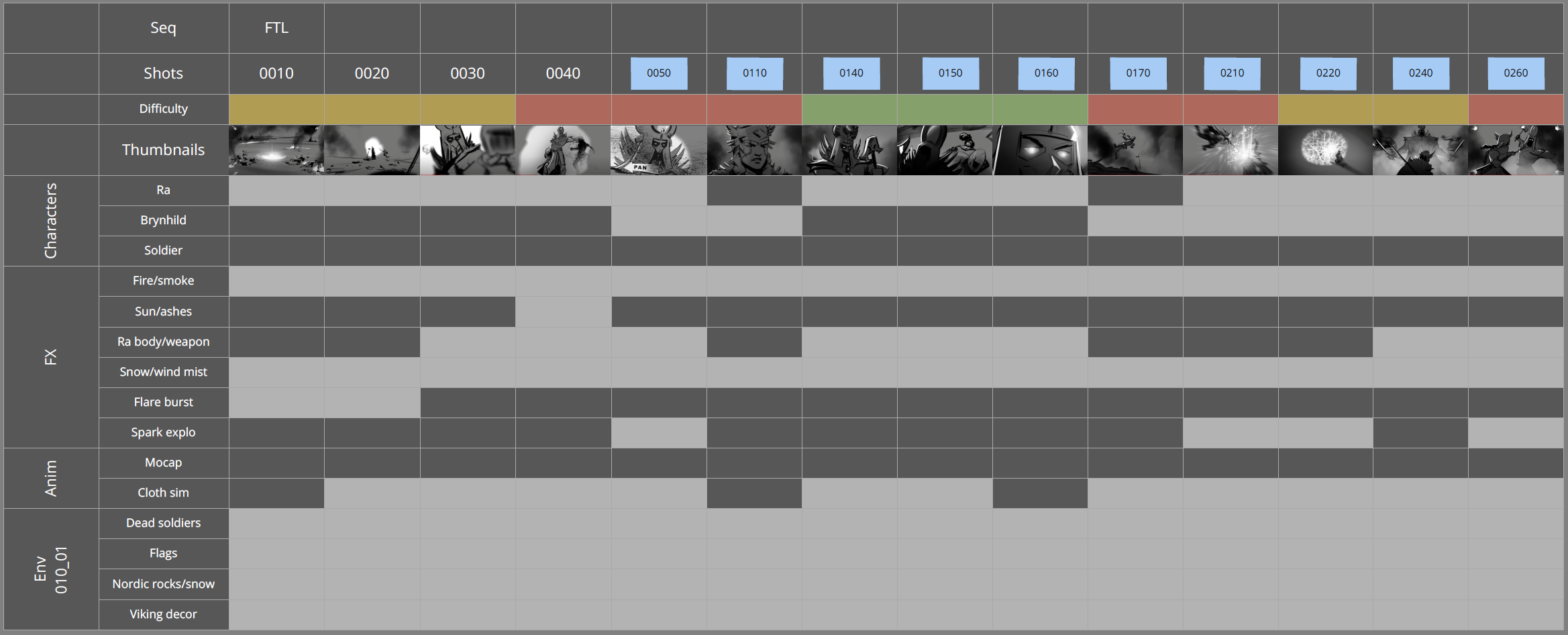
Asset outline for Godforge
Every design implies a method of execution. That method turns images into people, time, and cost - whether anyone planned for it or not.
Design decisions shape reuse, shoot days, and how work is split across techniques. When there’s a workflow that helps shape those decisions early, projects move with fewer surprises. When there isn’t, complexity shows up later as schedule pressure or blown scope.
Most budget problems start as ambiguity. Early visuals: layouts, cameras, environments, help reduce that ambiguity, and align teams while changes are still cheap. Planning doesn’t require heavy process, just a few focused conversations with supporting visuals that push things along.
Production design will shape scope, schedule, and cost either way. The difference is whether those decisions properly position virtual production, VFX, and now AI with intention—or whether issues discovered too late.